There is no homework for this week ! There is no class this Friday, May 5th because the police use the building!


Mrs. Jackson, my substitute, will see you at class on May 12!


Water Day Was a SPLASH!!


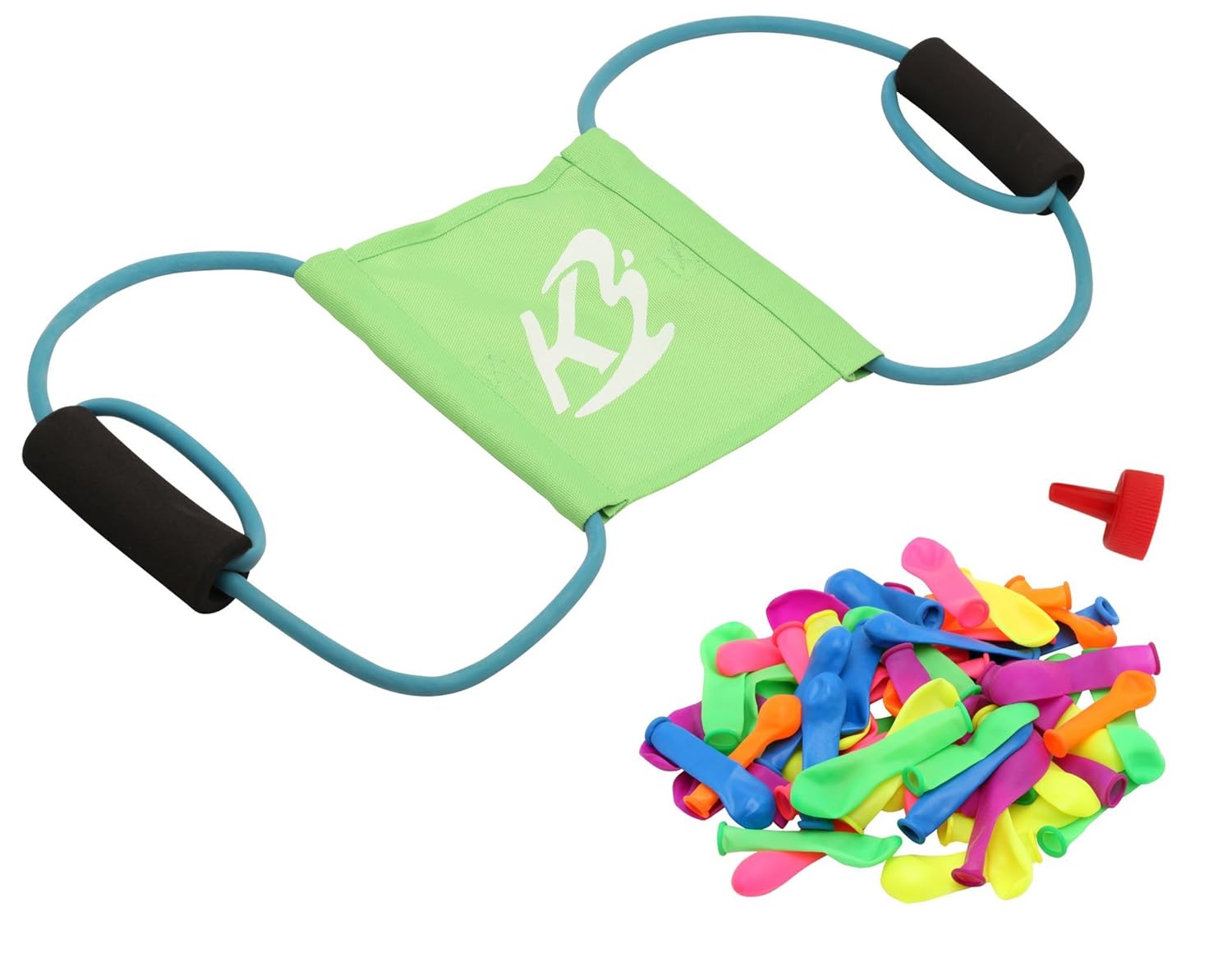
300 Water Balloons!!!!


THIS FRIDAY IS WATER SCIENCE DAY!  


You will get WET!  Bring a change of clothes if you don't want to dry out on the way home! 


Be sure to bring some legos to use in making a creation with our littlebits circuits!  In particular we need wheels and axels.  Your team will create a confetti blower and if we have time your team will create their own invention! See you Friday!   

We learned that a Rube Golberg Machine was a lot harder to set up than it looked!  But all of our little engineers had great grit and tried and tried again!  EVERYBODY was successful at one point!  I, however, was NOT successful at videotaping the successful runs.  But the unsuccessful runs gave us a laugh! 


Can't wait to see your Rube Goldberg Machines when they are done!


Hope you had a FANTASTIC spring break!  I did! 

Draw us a picture of something fun you did this week!
If you are in several classes you only have to do this ONCE to get credit for all!


For the last few weeks we have worked on 'engineering' some basic projects.  First we engineered a tower of fragile spaghetti - that you managed to make hold a huge Algebra text book!   This week you made a hovercraft. 


I've noticed that  you all are using your brains to try and find lots of solutions to our problems.  And when the activity doesn't work the first time you try another route.  You are being true scientists and engineers!  

Sometimes, though, you might find it hard to be flexible or to "stick with it" when you can't immediately solve a problem.  Of course, everybody gets frustrated with learning, now and then. 

But did you know that every time you press in and try again when learning gets hard that it actually makes you SMARTER?  This week, in order to understand how to build our "science brains" (which, by the way, builds your creative brain and your writing brain and just makes you generally smarter!) let's watch this video below.  Watch it with your parent and then discuss with them some ideas about what you can do when you feel like you want to give up on a project.  What are some ways to stick with learning so that you can "build your  brain muscles"?  Bring those ideas to class and we will discuss them! 


Now  watch this video on Engineering and  see if you can remember what Engineers do and what different kinds of engineers there are!


Engineers in the Making!!!

How strong is a piece of Spaghetti? Can it hold up an Algebra book? 
No Way!
First we tested with a little block, our spaghetti broke! 
Then we added a few more -


 We could hold up a little block.... 


 We added more strands and we could hold up a Composition book....


Or two, or three!!


The algebra book was tough! But Victor discovered that if he put his spaghetti facing inward he got more support and the others noticed that outward facing spaghetti gave us more stability - so everyone started adding spaghetti in various directions....Tada!!!!




Here is another Simple Machine: 


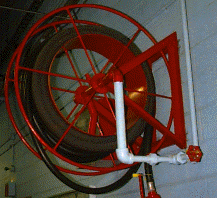
Wheel & Axle

Wheels and axels act like a rolling inclined plane. They make things move easier by removing friction. Sometimes teeth are cut into the wheel to make gears, a special kind of wheel and axel.
They occur in lots of places.

Look around your house and make a list of 10 different types of wheels and axels.

1. _____________________________________________________________

2. _____________________________________________________________

3. _____________________________________________________________

4. _____________________________________________________________

5. _____________________________________________________________

6. _____________________________________________________________

7. _____________________________________________________________

8. _____________________________________________________________

9. _____________________________________________________________

10. _____________________________________________________________


In class we are studying SIMPLE MACHINES.  This week we learned about LEVERS and you practiced using a sling shot, a kind of lever.  Tell your parents how our SLING SHOT LEVER helped you toss our item farther!


Click on the link below and work through the interactive exercise on how a PULLEY can help do more work.
Remember that a PULLEY is one of  6 SIMPLE MACHINES

PULLEY ACTIVITY.

Come to class ready to discuss what you learned about how a pulley can help with work!


There is no Friday School  on January 27th

The SAT Police are using the building!

See you on Friday, February 3rd!


Click on the word GRAVITY to read an article about Weight, Gravity and Friction.

GRAVITY

Now, think about the experiments that we did.  What factors affected the movement of your objects down the ramp?  What factors affected the movement of your body down the slide?  

Write down several observations you made about Weight, Gravity and Friction.

Is it possible to invent a perpetual motion machine (a machine that never stops moving)?

Hi, Scientists!  We began our unit on PHYSICS this week and started with a look at GRAVITY.  We had a super discussion and played with some interesting questions about Isaac Newton's formula for:

 This video is OPTIONAL.  I have included it as an advanced look at gravity.  The video is done in an interesting manner but is high school level physics.  


January 6th - first class of 2017


No homework this week!  I look forward to seeing you on Friday!

Your Science surprises turned out GREAT!  They are all ready to wrap this Friday!  

As we prepare to wrap up Chemistry I want to make sure we take one more peek at the periodic table.  Watch this video and see if you can learn a bit more about what the periodic table teaches us about our world!

Carbon Dioxide Bubbles

Ours were awesome- maybe you should try THIS at home!


Homework for a Holiday Prize!!

I missed you all last week!  Can't wait to see you again on December 2nd!

Click on the picture below & print and complete the Thanksgiving Sheet for a prize when we meet again on December 2nd.
  This is the same for Language Arts, Science and History so you only need to complete it once!


NOTE:

There is no class on November 18th because the San Antonio Police are using our building for a meeting.  There is also no class on the 25th for Thanksgiving Holiday.  


Click here for a recipe and more information about the slime and bouncy ball we made in class.  We made a POLYMER.
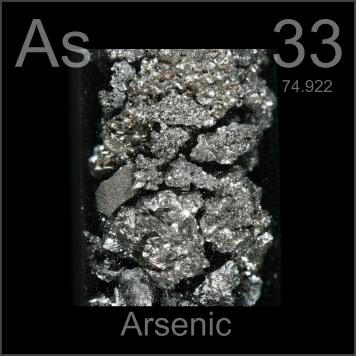

Click on this link to the periodic table of elements.  Choose one element (the one that you made with the puzzle in class) and click on it.  When you go to that elements page print 1-2 pages.  Read it over with a parent.  Bring the page to class so you can tell everyone about your element! 


Here is my element - Arsenic.  It is a poison and used in making computers! 
Arsenic

Arsenic

Atomic Weight74.9216
Density5.727 g/cm3
Melting Point817 °C
Boiling Point614 °C[note]
Full technical data

Arsenic was the poison of choice until its detection became easy. Combined with gallium it forms a semiconductor used in creating high-speed integrated circuits for supercomputers and cell phones.


Arsenic granules.
Small ampule of arsenic.
Source: Ethan Currens
Contributor: Theodore Gray
Acquired: 24 March, 2009
Text Updated: 24 March, 2009
Price: Anonymous
Size: 1"
Purity: 99.99%

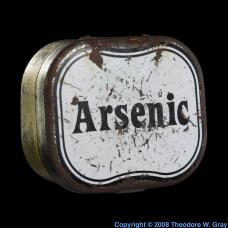
Arsenic Small tin of arsenic

Small tin of arsenic.
I guess this tin is for when you want to carry around a bit of arsenic in your purse or whatever. Does this bother anyone? It looks pretty well-used to me, which is another thing to worry about. Oh well, at least it's empty now.
Source: eBay seller fogie1
Contributor: Theodore Gray
Acquired: 28 November, 2003
Text Updated: 11 March, 2007
Price: $17.50
Size: 1.5"
Purity: 0%
Sample Group: Medical


Think About It...

What were the signs or clues that a chemical reaction was happening when we made our "mixture" and then heated it in the oven? (How did the mixture change when we subjected it to heat? )

1.
2.
3.