Click on the link below the picture  to access  your Abolitionist Lapbook Project.  


Homework Due May 5th.

 1.  Get out your lapbook packet we handed out in class.  Also get out the folder and special papers I printed for you.

2.  If you do not have your handout, print the handout and get a file folder.    

3. Now sit down with a parent and read through the calendar.  Decide together WHEN you will complete all of the items each week. After you both know what needs to be done to complete the project, please have your parent SIGN the top of the Calendar pages.  You will bring all of your work from May 5th to class on May 12th PLUS the signed calendar.  

4. My substitute, Mrs. Jackson, will need to call your parent if you don't have a signed calendar - please make sure she doesn't need to do that! Thank you!


Here are some links you can use to find information on your person!


William Lloyd Garrison, John Brown, Fredrick Douglass -    https://klrn.pbslearningmedia.org/collection/abolitionists/
     (you can watch the video - but with parent's guidance - a few brutal moments)
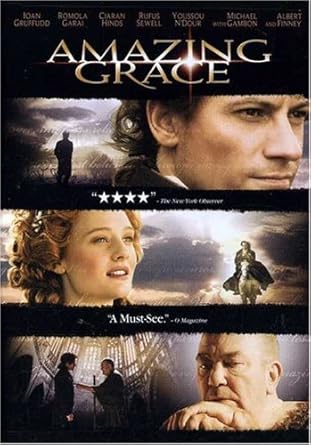
For William Wilberforce or Thomas Clarkson (research them first)- watch the movie Amazing Grace - your family will love it!
Amazing Grace
Harriet Tubman: 


Thomas Clarkson


Pictures of Thomas Clarkson's Collection Box - you have to click on each picture and look at it:

Abraham Lincoln and Abolition (read and watch) 
Homework Due May 12th.

Complete the assignment in your lapbook packet for May 12th - bring your homework to class.  


Homework Due May 19th & 26th

Complete the assignment in your lapbook packet for May 19th - bring your homework to class.  Presentations (which we randomly drew last Friday):  

May 19th : 

 Joey - William Lloyd Garrison, 

Alex - Harriet Tubman, 

Noah - Thomas Clarkson, 

Victor - Abraham Lincoln, 

May 26th :

Thomas - William Wilberforce

Gianna - John Brown

J.P. - Frederick Douglass


We have talked and thought about CHARACTERS while reading Johnny Tremain and now, when studying abolitionists. CHARACTERS have traits - these are qualities or attributes. Traits tell us what a character or person is like. 


Draw a line between each character and his/her traits:

Charcters                                Trait WORDS


Johnny Tremain                             faithful, lovely, kind

Cilla                                               devious, powerful, lying

Rab                                               quick learner, proud, brave

Mr. Lyte                                        intelligent, long-suffering, brave

Frederick Douglass                     welcoming, inclusive, good natured, brave

On Friday, I will bring a WORD for each of you. The WORD will be a WORD of encouragement and character that I think honors the traits YOU bring to our class and our gathering.  

Would you please bring a WORD or two for me, about our relationship as teacher and student or about the class?


If you are in Language Arts you can bring one word for both!

Read this excerpt from Narrative of the Life Frederick Douglass, an American Slave written by Douglass himself.  


I was born in Tuckahoe, near Hillsborough, and about twelve miles from Easton, in Talbot county, Maryland. I have no accurate knowledge of my age, never having seen any authentic record containing it. By far the larger part of the slaves know as little of their ages as horses know of theirs, and it is the wish of most masters within my knowledge to keep their slaves thus ignorant. I do not remember to have ever met a slave who could tell of his birthday. They seldom come nearer to it than planting-time, harvest-time, cherry-time, spring-time, or fall-time. A want of information concerning my own was a source of unhappiness to me even during childhood. The white children could tell their ages. I could not tell why I ought to be deprived of the same privilege. I was not allowed to make any inquiries of my master concerning it. He deemed all such inquiries on the part of a slave improper and impertinent, and evidence of a restless spirit. The nearest estimate I can give makes me now between twenty-seven and twenty-eight years of age. I come to this, from hearing my master say, some time during 1835, I was about seventeen years old.


What are your thoughts about what Frederick Douglass shares? 


What have you noticed in the movie so far that is different from the book, Johnny Tremain? 


Johnny Tremain:
We finished the book!  Several of you didn't like how the author chose to end it. Jot a few notes about how YOU would have ended the book! 


Hope you had a FANTASTIC spring break!  I did! 

Draw us a picture of something fun you did this week!
If you are in several classes you only have to do this ONCE to get credit for all!


There is no homework for this week ! See you Friday!

Congratulations to all who got a free item at the snack bar for completing your homework last week!


Read this poem written about 100 years after the historical events we are reading about in Johnny Tremain - highlight your favorite 3-5 lines.

Paul Revere's Ride

Henry Wadsworth Longfellow

Listen my children and you shall hear
Of the midnight ride of Paul Revere,
On the eighteenth of April, in Seventy-five;
Hardly a man is now alive
Who remembers that famous day and year.He said to his friend, "If the British march
By land or sea from the town to-night,
Hang a lantern aloft in the belfry arch
Of the North Church tower as a signal light,--
One if by land, and two if by sea;
And I on the opposite shore will be,
Ready to ride and spread the alarm
Through every Middlesex village and farm,
For the country folk to be up and to arm."
Then he said "Good-night!" and with muffled oar
Silently rowed to the Charlestown shore,
Just as the moon rose over the bay,
Where swinging wide at her moorings lay
The Somerset, British man-of-war;
A phantom ship, with each mast and spar
Across the moon like a prison bar,
And a huge black hulk, that was magnified
By its own reflection in the tide.
Meanwhile, his friend through alley and street
Wanders and watches, with eager ears,
Till in the silence around him he hears
The muster of men at the barrack door,
The sound of arms, and the tramp of feet,
And the measured tread of the grenadiers,
Marching down to their boats on the shore.
Then he climbed the tower of the Old North Church,
By the wooden stairs, with stealthy tread,
To the belfry chamber overhead,
And startled the pigeons from their perch
On the sombre rafters, that round him made
Masses and moving shapes of shade,--
By the trembling ladder, steep and tall,
To the highest window in the wall,
Where he paused to listen and look down
A moment on the roofs of the town
And the moonlight flowing over all.
Beneath, in the churchyard, lay the dead,
In their night encampment on the hill,
Wrapped in silence so deep and still
That he could hear, like a sentinel's tread,
The watchful night-wind, as it went
Creeping along from tent to tent,
And seeming to whisper, "All is well!"
A moment only he feels the spell
Of the place and the hour, and the secret dread
Of the lonely belfry and the dead;
For suddenly all his thoughts are bent
On a shadowy something far away,
Where the river widens to meet the bay,--
A line of black that bends and floats
On the rising tide like a bridge of boats.
Meanwhile, impatient to mount and ride,
Booted and spurred, with a heavy stride
On the opposite shore walked Paul Revere.
Now he patted his horse's side,
Now he gazed at the landscape far and near,
Then, impetuous, stamped the earth,
And turned and tightened his saddle girth;
But mostly he watched with eager search
The belfry tower of the Old North Church,
As it rose above the graves on the hill,
Lonely and spectral and sombre and still.
And lo! as he looks, on the belfry's height
A glimmer, and then a gleam of light!
He springs to the saddle, the bridle he turns,
But lingers and gazes, till full on his sight
A second lamp in the belfry burns.
A hurry of hoofs in a village street,
A shape in the moonlight, a bulk in the dark,
And beneath, from the pebbles, in passing, a spark
Struck out by a steed flying fearless and fleet;
That was all! And yet, through the gloom and the light,
The fate of a nation was riding that night;
And the spark struck out by that steed, in his flight,
Kindled the land into flame with its heat.
He has left the village and mounted the steep,
And beneath him, tranquil and broad and deep,
Is the Mystic, meeting the ocean tides;
And under the alders that skirt its edge,
Now soft on the sand, now loud on the ledge,
Is heard the tramp of his steed as he rides.
It was twelve by the village clock
When he crossed the bridge into Medford town.
He heard the crowing of the cock,
And the barking of the farmer's dog,
And felt the damp of the river fog,
That rises after the sun goes down.
It was one by the village clock,
When he galloped into Lexington.
He saw the gilded weathercock
Swim in the moonlight as he passed,
And the meeting-house windows, black and bare,
Gaze at him with a spectral glare,
As if they already stood aghast
At the bloody work they would look upon.
It was two by the village clock,
When he came to the bridge in Concord town.
He heard the bleating of the flock,
And the twitter of birds among the trees,
And felt the breath of the morning breeze
Blowing over the meadow brown.
And one was safe and asleep in his bed
Who at the bridge would be first to fall,
Who that day would be lying dead,
Pierced by a British musket ball.
You know the rest. In the books you have read
How the British Regulars fired and fled,---
How the farmers gave them ball for ball,
>From behind each fence and farmyard wall,
Chasing the redcoats down the lane,
Then crossing the fields to emerge again
Under the trees at the turn of the road,
And only pausing to fire and load.
So through the night rode Paul Revere;
And so through the night went his cry of alarm
To every Middlesex village and farm,---
A cry of defiance, and not of fear,
A voice in the darkness, a knock at the door,
And a word that shall echo for evermore!
For, borne on the night-wind of the Past,
Through all our history, to the last,
In the hour of darkness and peril and need,
The people will waken and listen to hear
The hurrying hoof-beats of that steed,
And the midnight message of Paul Revere.


JOHNNY TREMAIN 

If you were not in class, please read through chapter IX except the last section of IX  which we did not read.  Print this page and fill in the blanks with the following words:

  smock,    letters,        Rab,     British,     spy,     outlying towns,       Pumpkin,  letters,    British troops,        musket,      Whig forces,     farm,       apprentices


Paul Revere organizes a _____________  system made up of master artisans and their  ________________  to keep a watch on the _____________ forces in Boston. The purpose of the spy system is to alert any _____________________  if the soldiers appear to be advancing in their direction.
Lydia gives Johnny the shreds of some aborted_____________ that Lieutenant Stranger had drafted to Lavinia Lyte. The ____________ (same word as previous) reveal valuable information about the movements of _______________. As a result of this information, the ___________________ are able to seize a store of British military supplies. Meanwhile, Stranger gives Johnny a lesson jumping hurdles. Johnny is puzzled that Stranger treats him like an equal where horses are concerned but as an inferior in all other contexts.
Johnny discovers that many of the British regulars are actually Whigs. One of them, ________________, asks for Johnny’s help in deserting his post. He dreams of owning his own _____________, a dream he has no chance of fulfilling in England. Johnny gives Pumpkin a farmer’s ______________sewn by his mother before she died and arranges to have him smuggled out of Boston. In return, Pumpkin gives Johnny his _______________ and his old uniform. Johnny gives the musket to ______________.

Just in Time for Valentines Day! 

Johnny Tremain is growing up.  Along with the political story of the day we are learning about Johnny and Cilla's friendship.  They have known each other since childhood, were promised to each other in marriage, but seems they are free to make their own decision about this.   Click the link here to read about Courtship and Marriage in Colonial America.  Be prepared to discuss what you have read in class.


There is no Friday School  on January 27th

The SAT Police are using the building!

See you on Friday, February 3rd!


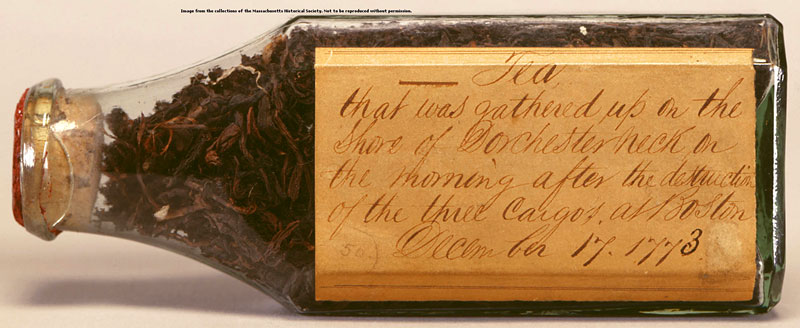
Click on the picture to read a page about the impact of the Boston Tea Party on the city of Boston.  Jot down at least 3 facts that interest you to share with the class.


There is no homework for this week ! See you Friday!


January 6th - first class of 2017


No homework this week!  I look forward to seeing you on Friday!


Study these designs of Colonial Homes.  


We will have a fun activity in class for our Christmas Party!  I will bring something to drink.  If you would like to bring a treat or snack to share that would be great!  

Homework - Read and Ponder

Revolutionary History


Historians have long praised newspapers for the role they played during the American Revolution, but they don’t always zero in on specific papers that were particularly important during this time. Rather, they give deserving praise to all of the press for the help they gave in winning independence. But there are particular newspapers that should be recognized for their individual contributions to American success in the Revolution. Many of them were published in major cities (particularly ports) which meant they had much more access to news from Britain than newspapers in more isolated areas.
Read about this paper in Boston:

Boston Gazette

Leading the list would obviously be the Boston Gazette. Published by Benjamin Edes and John Gill from 1755 to 1775 and then by Edes alone after that, the Boston Gazette was a major source of information about a number of important events leading up to the split from Great Britain. Much of this was because Boston was the center of much of the early conflict between the colonies and Great Britain. Many of the original reports about the arguments over taxes, the Boston Massacre, and the Boston Tea Party first appeared in the Boston Gazette. But the newspaper’s impact went beyond the content of their stories and reflected a growing opposition to the actions of British officials. The Boston Gazette became the primary mouthpiece for Samuel Adams and others who increasingly opposed the British government. Because of this reality, many of the pieces published in the Boston Gazette did more than just tell the story – they presented reports of events in the context of British efforts to deny Americans their rights. The spread of this outlook was essential if the colonies were going to break away from Great Britain and the Boston Gazette played an essential role in the dissemination of the growing attitude of opposition to the Royal Government.
Who did Johnny Tremain just go to work for? 

Homework for a Holiday Prize!!

I missed you all last week!  Can't wait to see you again on December 2nd!

Click on the picture below & print and complete the Thanksgiving Sheet for a prize when we meet again on December 2nd.
  This is the same for Language Arts, Science and History so you only need to complete it once!


NOTE:

There is no class on November 18th because the San Antonio Police are using our building for a meeting.  There is also no class on the 25th for Thanksgiving Holiday.  


Homework


Write down your favorite part of Johnny Tremain so far.  What do you think will happen to Johnny?


There is no homework for this week ! See you Friday!


Homework #7

Print this document which is the first two sections of the Declaration of Independence.  Read through it with a parent.  What parts can you understand?  Then watch the video  of George Washington reciting parts of the Declaration of Independence to his troops.  What do you think he is saying?  Write what he is saying in your own words.