April 29th - End of Year
There is no more homework for this class!* See you Friday!
*Except Thomas - please send me your story, with added paragraphs and punctuation NO LATER THAN TUESDAY Morning, April 26th! I need to send the stories to the publisher!

Homework Due April 22nd.
1. Write a one paragraph (5-8 sentences) response (use your imagination!) to these questions:
After Saknis and Atean left the woods of Maine where do you think they went, what was life like for them? Did life get better or worse? How?
1. Write a one paragraph (5-8 sentences) response (use your imagination!) to these questions:
After Saknis and Atean left the woods of Maine where do you think they went, what was life like for them? Did life get better or worse? How?
1. Help needed getting our Class Collection of Short Stories to the publisher! Please follow up on these items:
1. Eunice, I need your pictures (please complete pictures in black on white, vertically on a 5.5 X 8 page= a 8.5 X 11 folded in half - just be sure to draw the pictures tall not wide!)
2. Thomas I need your story and pictures! Thank you! (please complete pictures black on white, vertically on a 5.5 X 8 page= a 8.5 X 11 folded in half - just be sure to draw the pictures tall not wide!)
3. Please tell me the NUMBER OF BOOKS at $7 a copy you want me to order:
Done - Manifold - 2 copies of the Class Short Story Collection
Done - Kaeppel - 2 Copies of the Class Short Story Collection
______? Mexicano - saw a yes reply but don't know how many?
______? Enyeart - need to know!
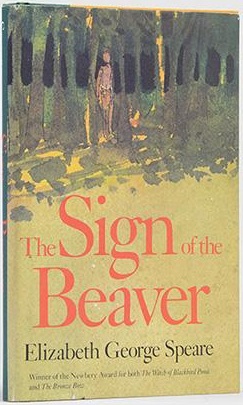
2. Caleb, we missed you! Read up through chapter 22 in Sign of the Beaver - we will finish the book this week!
3. Click here and scroll through this Prezi about the life of Elizabeth George Speare - the author of Sign of the Beaver.
Response needed from parents:
I would love to publish your students short stories as a collection - in one book. My daughter, who does book design as a profession, has volunteered to format the interior of the book and also create a professional book cover. (See her website here: and her portfolio here)
I can publish the book and have it printed for $7 a copy. (The price will go up slightly if someone opts out and will drop slightly if any of you want more than one copy).
Would you please send me a quick email letting me know if you would like to purchase one or more copies of your child's short story in a collection?
(No money needed now - I will not order them until April). Sample cover designed by Emma:

1. Please finish typing your story by this Friday. I will read them and give you some feedback. The FINAL VERSION is due to me attached to email by Wednesday, March 23nd.
2. Begin Working on illustrations for your short story. You should complete 5 high quality illustrations. Please make your illustrations BLACK INK on WHITE paper. Please do these drawings on high quality 8.5 X 11 paper. FILL UP THE PAGE. Small or low contrast illustrations will not print well! Those illustrations are due in class on April 1st.
Friday, March 18th is Spring Break for Friday School - there will be no classes on March 18th
IMPORTANT NOTE: Friday, March 25th is GOOD FRIDAY and is optional for Friday School. My family celebrates GOOD FRIDAY so I will NOT be holding classes on March 25th.
Assignment #2 - illustrations, above is your assignment for March 25th.
Homework Due March 4th.
1. This is for fun! Watch this video of baby beaver rescue - since we just studied beavers last week in class! I love the noises they make when eating!
2. You should finish your story this week and start typing! Work with your Mom or Dad or older sibling to get your story typed. You will still be making some changes to your story but we want to get it typed so it is easier to make those changes. Tell the person typing that they can help you make any changes to spelling, punctuation or mechanics that will make the story easier to read but that the STORY is yours and should be left as you have written it.
Mom's and Dad's may want to point out where a part of your story is confusing or needs work - then you can decide what to add or change!
Your typed story is due in 2 Weeks!
Homework Due February 26th.
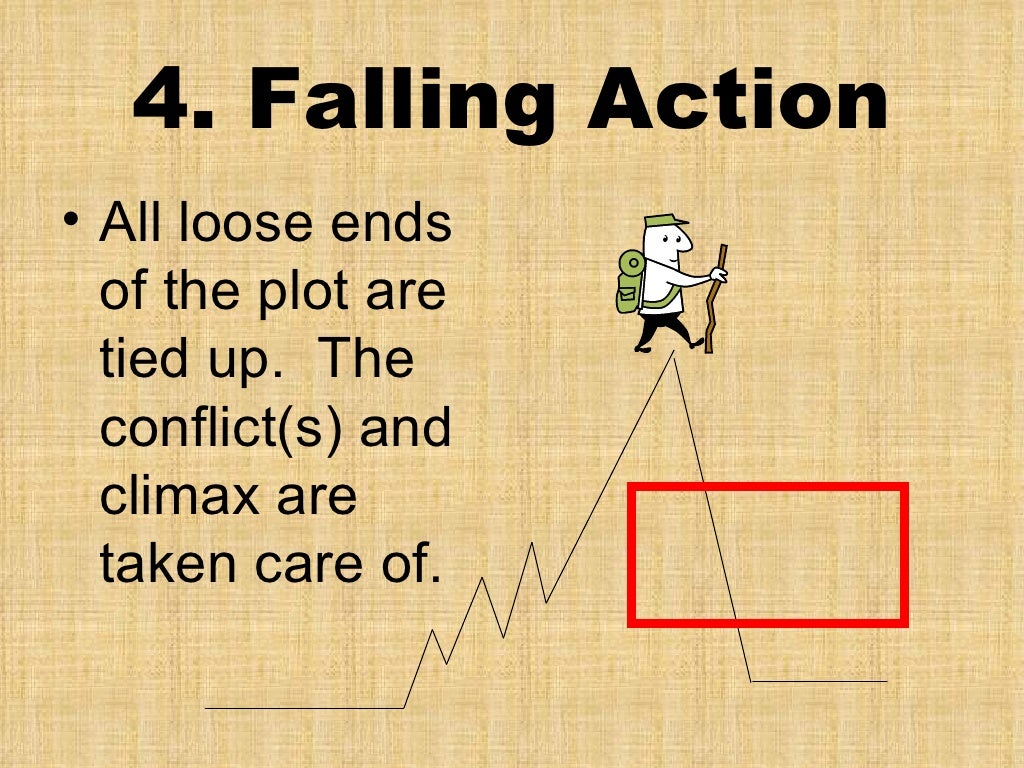
1. Write the climax for your story if you did not complete it last week. Below is an image to remind you what the Climax is all about. Also, the Climax is where the main character loses or nearly loses what he or she wants most in all the world.

2. Write the Falling Action of your story. Remember, the Falling Action is "What happens after the the Climax". If the Climax was a contest - the winner gets an award, if it was a war the victors celebrate, if it was a lost friend the found friend and the main character celebrate.


Homework Due February 19th.
1. Write the 3rd and final rising action for you story. Remember - you should save the REALLY BIG conflict for the climax.
2. Write the climax for your story. (Thomas - be sure to catch up with us by making sure you have completed the inciting incident, 3 rising actions and the climax).
See you Friday!
Homework Due February 12th.
Put your character in danger...

Homework Due February 12th.
Put your character in danger...
1. Continue writing your short story. You have been preparing for this for the last 2 months. Be sure to use the plot that you have planned out and all of the work you have done in your writing notebook! This week, write on at least 3-4 different occasions. Write 1 more RISING ACTION EVENT. You should write 3-4 paragraphs for this RISING ACTION. You may write more if you wish. Your should keep in mind that your Rising Action should put your Protagonist (main character) at increasing risk of loosing what s/he wants most in all the world! Also, make sure your ANTAGONIST is introduced in this crisis, s/he will need to be familiar to your audience by the time you reach the CLIMAX. Each RISING ACTION should get more exciting!
2. Caleb, if you decide to change your writing from 1st to 3rd person then your assignment is different - you should simply set your first person story aside and write your INCITING INCIDENT and your FIRST RISING ACTION in 3rd person. You will catch up in the next 2 weeks.
3. Thomas, you did not write last week so you should follow last weeks instructions. Please have your mom call me if you are still confused.
4. Tell your parents that you will need their help typing your Short Story when it is complete. That will be near the end of February or middle of March. I just want them to know so that they can plan ahead. We will complete our Short Stories and edit them first.
Homework #4 & 5
There is no Friday School on January 29th because the SAPD will be using the building. This homework is due February 5th!
Homework Due February 5th.

Homework Due February 5th.
1. Begin writing your short story. You have been preparing for this for the last 2 months. Be sure to use the plot that you have planned out and all of the work you have done in your writing notebook! This week, write at least 3-4 times and write your INCITING INCIDENT. Remember, that is the part of the story that sets your main character on his or her journey towards what he/she wants more than anything else in the world. Each of you has already decided your inciting incident is (if you are unsure about this please contact me. My phone # is 210-865-3309). You should write 3-4 paragraphs about your inciting incident - you may write more.
2. The next week (January 31-February 5th) write your first RISING ACTION. This is your first exciting event that happens AFTER your Inciting Incident. Write at least 3-4 times and write your first Rising Action. You should write 3-4 paragraphs. You may write more if you wish. Your should keep in mind that your first Rising Action should put your Protagonist (main character) at risk or in a bad place. In particular, your Protagonist should sustain some damage or impediment that could hinder him/ her from getting what they want most in all the world.
3. Tell your parents that you will need their help typing your Short Story when it is complete. That will be near the end of February or middle of March. I just want them to know so that they can plan ahead. We will complete our Short Stories and edit them first.
1. We worked on SETTING in class. It was fun to see your PROTAGONIST'S (main character's) room and to learn more about that character based on his/her personal space. Using the story you are planning to write, draw your ANTAGONIST'S ROOM. Remember, the Antagonist is the bad guy or the character that tries to interfere with what the protagonist wants more than anything else in the world. Give him/her lots of interesting items in his/her room so that the class can guess a great deal about the personality of your antagonist.

2. Print this Plot Structure Diagram.
Fill out as much as you can of the diagram for our book The Sign of the Beaver. You should be able to fill out everything in this list that is not crossed out. If it is crossed out, leave that section blank :
- Characters
- Setting
- Conflict
ResolutionTurning Point- Rising Action
Falling ActionTheme
Homework due January 15th.
1.Begin thinking about the SETTING in your Short Story.
The setting is the place and time your story is 'set'. Letting your readers know where and when your story is set will help bring the story to life. If the setting is somewhere your readers aren't familiar with then make sure you describe it in detail.
Two stories can be set in exactly the same place, but feel completely different because of the words the writer chooses to use.
Every story needs a setting. What do you think is the difference between what is happening in the stories of each illustration below? How does the setting change the mood of the story?

3. Put all the pages in your notebook. We will complete pages 34 and 35 in class.
1.Begin thinking about the SETTING in your Short Story.
The setting is the place and time your story is 'set'. Letting your readers know where and when your story is set will help bring the story to life. If the setting is somewhere your readers aren't familiar with then make sure you describe it in detail.
Two stories can be set in exactly the same place, but feel completely different because of the words the writer chooses to use.
Every story needs a setting. What do you think is the difference between what is happening in the stories of each illustration below? How does the setting change the mood of the story?

Go to this writing workbook link and READ page 31 then print pages 32 - 35 on Setting.
(NOTE: you will need to enter pages 34-37 on your printer - this will print pages 32-35.)
2. Think about your short story while you READ page 31 and then complete pages 32 and 33.
(NOTE: you will need to enter pages 34-37 on your printer - this will print pages 32-35.)
2. Think about your short story while you READ page 31 and then complete pages 32 and 33.
3. Put all the pages in your notebook. We will complete pages 34 and 35 in class.
Homework #1- 2016

January 8, 2016
Hope you all had a very Merry Christmas and a happy start to 2016!
There is no homework for this week ! See you Friday!
Homework #11
Homework Due December 11th.

1.Begin thinking about the CONFLICT in your Short Story. Remember, Conflict makes a story interesting and exciting!
Go to this writing workbook link and print and complete pages 16-18 on Characters.
(NOTE: you will need to enter pages 18-20 on your printer - this will print pages 16-18.)
2. Think about your short story while you READ page16 and then complete pages 17 and 18.
Homework #10

1.Begin thinking about your characters for the Short Story you will write.
Go to this writing workbook link and print and complete pages 11-15 on Characters.
(NOTE: you will need to enter pages 13-17 on your printer - this will print pages 11-15.)
2. Think about your short story while you READ pages 11 and 12 then complete pages 13-15 brainstorming about your story's characters.
Homework #9
Hope you all had a fantastic Thanksgiving!

1. In class we discussed PLOT: set up, inciting incident, rising action, climax, falling action and resolution. In class we completed a plot roller coaster for 4 different stories. Take a look at some of your work from class to remind yourself about each part of a stories plot.
2. In class you took a card and wrote a brief summary of the type of story YOU would like to write. Be thinking about that story as you do the homework for this week:
3.Review the class handout on PLOT. Use the plot pages 20-30 to outline the PLOT for your short story! (IMPORTANT: when filling in the blank roller coaster page 29 USE THIS PAGE INSTEAD The online form leaves out the "Inciting Incident", where the action starts to rise. )
1. Remember: first identify your main character and write down what he/she wants most in the world.
2. The Inciting Incident is what launches your main character on his/her adventure.
3. It might be helpful next to identify the CLIMAX (the high point, most exciting point of the story where the main character looses or comes close to losing what he/she wants most in the whole world).
4. Continue to add a sentence or two about what will happen in each part of your story during the set up, the rising action, the falling action. When you complete your PLOT ROLLER COASTER you will have a good idea about the action in your short story!
See you Friday!!
Homework #7
There is no Friday School this week, November 6th! See you Friday, November 13th!
Homework Due November 13th.
Complete your Shel Silverstein Poetry Workshop by doing these pages:
1. Page 3: Epigram Poem.
2. Page 7: Rebus Poetry
3. Page 9: Write an acrostic poem using YOUR NAME (ignore the instructions that tell you to write about a friend or family member.)
4. Page 11: Homonyms. Write out the homonyms for 1-4 then write at least one joke using those homonyms or another homonym pair that you come up with.
5. Page 13: Write one more stanza of the poem, The Toucan. Follow the instructions on the page.
6. Print this sheet about Characters in novels. Read through it carefully and answer the questions about characters in our novel, Ginger Pye.
7. This is our next novel for class. Please have it in class no later than November 20th.
Complete your Shel Silverstein Poetry Workshop by doing these pages:
- First Print this Epigram Poem Example sheet.
- Read it, and re-read each epigram.
- Read the fun poem by Silverstein on page 3 of the Poetry Workshop book.
- First, write your own epigram continuation of the poem, Stone Airplane.
- Then write two other Epigram Poems.
2. Page 7: Rebus Poetry
- First, print this poem by Shel Silverstein, Deaf Donald
- Read the poem, Deaf Donald and notice how the drawing lends meaning to the poem.
- Now, use page 7 to write a Rebus Poem version of the poem, Hitting
3. Page 9: Write an acrostic poem using YOUR NAME (ignore the instructions that tell you to write about a friend or family member.)
4. Page 11: Homonyms. Write out the homonyms for 1-4 then write at least one joke using those homonyms or another homonym pair that you come up with.
5. Page 13: Write one more stanza of the poem, The Toucan. Follow the instructions on the page.
6. Print this sheet about Characters in novels. Read through it carefully and answer the questions about characters in our novel, Ginger Pye.
7. This is our next novel for class. Please have it in class no later than November 20th.
Homework #6
Great work reading our Edgar Allen Poe, Edward Lear, William Shakespeare, Emily Dickinson and Robert Frost in class! We began working on your Shel Silverstein Poetry Workshop notebook in class - please complete the following pages:
1. Complete page 2 Rhyming Poetry - be sure to come up with as many rhymes as you can for the 5 words (there will be a mini prize for the most qualifying rhymes).
2. Skip to page 5 and work on Concrete Poetry. (We looked at this one in class.) Write at least one Concrete Poem. You can use the bottom of the page or your own paper.
3. Read page 6, List Poetry. Write your own list poem.
4. On page 8, Non-Rhyming Poetry. Read the directions carefully and write your own non rhyming poem by filling in the blanks at the bottom of the list.
5. Read this poem below, 3 times. First read it to yourself. Then read aloud. Finally underline any words or phrases you think are important. Write one or two sentences about what you think Robert Frost is saying in this poem.
Nothing Gold Can Stay by Robert Frost
Nature’s first green is gold,
Her hardest hue to hold,
Her early leaf’s a flower;
But only so an hour.
Then leaf subsides to leaf.
So Eden sank to grief,
So dawn goes down to day.
Nothing gold can stay.
Homework #5
Hello, Guys! These are both a bit goofy - but I want you to start thinking about what makes a rhyming word as we get ready to write some poetry! I know these are very simple - but they will get you thinking about your own Rhyming words! See you Friday!
1. What makes a Rhyming Word? Watch this Video!
2. Click below and play this Rhyming word game. Play at least twice!
http://pbskids.org/wordworld/characters/game_frm.html
